In many provinces and cities across the country, summer heat has begun, with peak hot days approaching. For car users, parking outside under the blazing sun for hours can make the car interior unbearably hot and stuffy once you open the door.
The basic principles of cooling down a car are similar to cooling a home, and a car’s air conditioning system operates just like a household AC unit. It can suffer from technical issues if overworked, poorly maintained, or left uncleaned. Here are a few helpful tips to keep your car cool and comfortable during the summer.
Inspect, maintain, and clean the car’s air conditioning system
In hot weather, the AC system often operates at full capacity. To ensure stable operation, effective cooling, and user health, components like the radiator, evaporator, condenser, refrigerant level, and especially the cabin air filter should be inspected and maintained early in the season. This helps prevent gas leakage or other technical issues during use.
- The evaporator, fan blower, and condenser should be serviced every 20,000 km.
- The air filter should be checked every 10,000 km and replaced every 40,000 km.
- Other components like refrigerant, oil, and filter driers should be checked every 20,000 km and replaced every 50,000 km.
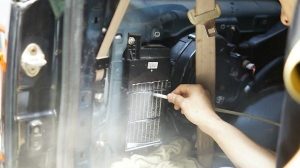
Car owners can also do basic maintenance themselves, such as cleaning the air vents and filters. Depending on the car model, replacing the cabin air filter or using specialized sprays to clean and deodorize air vents can help remove musty odors. If you can’t handle it yourself, you can take your vehicle to a garage for full AC system cleaning and maintenance.
Use sunshades and heat-blocking films when parking in high temperatures
In extreme heat, it’s ideal to find shaded parking or park under a roofed area. This protects your car’s paint, interior parts like the dashboard and leather seats, and reduces the load on the AC system.
However, ideal parking spots are not always available. In such cases, equipping your car with a cover and quality heat-insulating film is a smart solution. Good heat-insulating films typically last 7–10 years. After that, their heat-resistance effect drops significantly and should be replaced.
Even if your car is already tinted with heat-blocking film, it’s still recommended to use a reflective cover or umbrella when parking in direct sunlight. If the parking area is secure, you can also lower the windows slightly (1–2 cm) to help air circulate and avoid trapped heat.
Don’t turn on the ac immediately or aim the vents directly at yourself
Most car users tend to start the engine, switch on the AC, set it to the lowest temperature, and blast the fan as soon as they enter the car. However, this habit can damage the car’s electrical and AC systems over time and may even affect your health. Instead, try these smarter practices:
- Before entering the vehicle, open the front passenger window and repeatedly open and close the opposite door a few times to push out hot air from the cabin. Then, get in, start the engine, turn on the AC, and close the windows.
- If you’re in a rush or can’t tolerate the heat to do that, when entering the car, lower all the windows for 2–3 minutes and only turn on the fan (without AC) to help reduce interior temperature. Start driving, and then gradually turn on the AC. Avoid setting the AC to the lowest temperature right away, as this can overload the system and waste energy. Let the car cool down gradually to avoid thermal shock or overpressure on the compressor.
- Many people tend to point the air vents directly at themselves in the heat. However, that’s not the best approach. Instead, adjust the vents so that cool air is distributed evenly throughout the cabin to ensure consistent and comfortable cooling.

Follow CarDoctor to stay updated with the latest news on the automotive market, along with useful tips to help you drive safely, conveniently, and economically!