In the context of the increasingly competitive Vietnamese automotive service industry and increasingly complex operational requirements, garages are gradually shifting from manual management to digital platforms. Notably, 2026 marks the clear emergence of the SaaS (Software as a Service) model in the garage management software sector.
Beyond being a technological trend, SaaS is becoming a practical choice to help garages optimize costs, enhance operational efficiency, and prepare for future scalability.
What is the SaaS Model and Why is it Suitable for Garages?
SaaS (Software as a Service) is a software distribution model delivered as a service over the internet. Instead of installing, operating, and maintaining systems on private infrastructure, users simply subscribe and use the platform directly online.

For automotive garages, especially Small and Medium Enterprises (SMEs), this is an ideal solution as it:
- Requires no initial IT infrastructure investment.
- Eliminates the need for an in-house technical team to operate the system.
- Enables rapid deployment and immediate use.
Consequently, the barriers to technology adoption are significantly lowered, allowing many garages to begin their digitalization journey with ease.
1. Optimizing Investment and Operational Costs
One of the most prominent advantages of the SaaS model is its ability to help garages control and optimize costs from the very beginning.
With traditional software, garages often invest in infrastructure such as servers, data storage systems, initial installation fees, and technical staff—a major hurdle for SMEs. Additionally, the costs of maintenance and periodic upgrades are significant and often difficult to control.
In contrast, SaaS operates on a flexible subscription basis, allowing garages to pay only for what they need. This reduces initial financial pressure and makes it easier to forecast operational budgets at each stage. Furthermore, software updates, bug fixes, and security enhancements are handled by the provider. Garages no longer need a dedicated IT team, allowing them to focus resources on core business activities: repairs and customer care.
2. Rapid Deployment Aligned with Operational Realities
Deployment speed is a critical factor in a garage environment, where any disruption directly impacts revenue.
Unlike traditional systems that often take weeks or months to implement and train, SaaS platforms allow garages to go live almost instantly. With just an internet-connected device, a garage can access and operate the system. This is particularly suitable for the Vietnamese market, where most garages lack the time or resources for complex IT projects. Rapid “onboarding” minimizes the risk of operational downtime. Moreover, modern SaaS platforms are designed with intuitive interfaces and simplified workflows, allowing technicians, warehouse staff, and accountants to adapt quickly without extensive training.
3. Seamless Scalability
As a garage grows, management challenges expand from a single service point to multiple branches, departments, and larger data volumes. In a traditional model, expansion often involves costly system upgrades or software overhauls.
SaaS, however, is designed with inherent scalability. Garages can easily add users, assign granular roles, or expand features as needed without altering the system structure. For businesses aiming to develop into a chain, SaaS enables centralized management of multiple branches on a single platform. Owners can monitor individual facility performance, compare business efficiency, and coordinate resources flexibly—ensuring technology supports growth rather than limiting it.
4. Data Synchronization and Enhanced Oversight
A major challenge in garage operations is “data silos”—fragmented information between the warehouse, accounting, technical, and management departments. This leads to discrepancies, spare parts leakage, and difficulty in cost control.
The SaaS model resolves this by centralizing all data into a single source of truth. From procurement and inventory to service delivery and accounting, all records are updated in real-time. Owners can monitor operations from anywhere, even without being physically present at the workshop. Automated reports on revenue, inventory, and performance enable faster and more accurate data-driven decision-making.
5. Ecosystem Connectivity and Long-term Value
In the current era, management software is no longer just for internal operations; it is becoming part of a broader automotive service ecosystem.
Modern SaaS platforms can integrate with other systems such as spare parts e-commerce marketplaces, CRMs, or financial services. For example, direct connection to parts suppliers shortens sourcing time and optimizes purchase prices. In the long term, standardized data on a SaaS platform becomes a vital asset, helping garages enhance their credibility, access capital more easily, and build a sustainable brand.
Conclusion: An Inevitable Trend
The rapid growth of SaaS reflects a core reality: digitalization is now essential for survival in the automotive service industry. In Vietnam, this trend is being realized through platforms developed specifically for the local market.
Notably, solutions like GMS (Garage Management System) are built on the actual operational needs of Vietnamese garages, from small workshops to multi-branch systems. These platforms not only meet basic needs like inventory and accounting but also integrate connectivity with parts suppliers and the wider ecosystem.
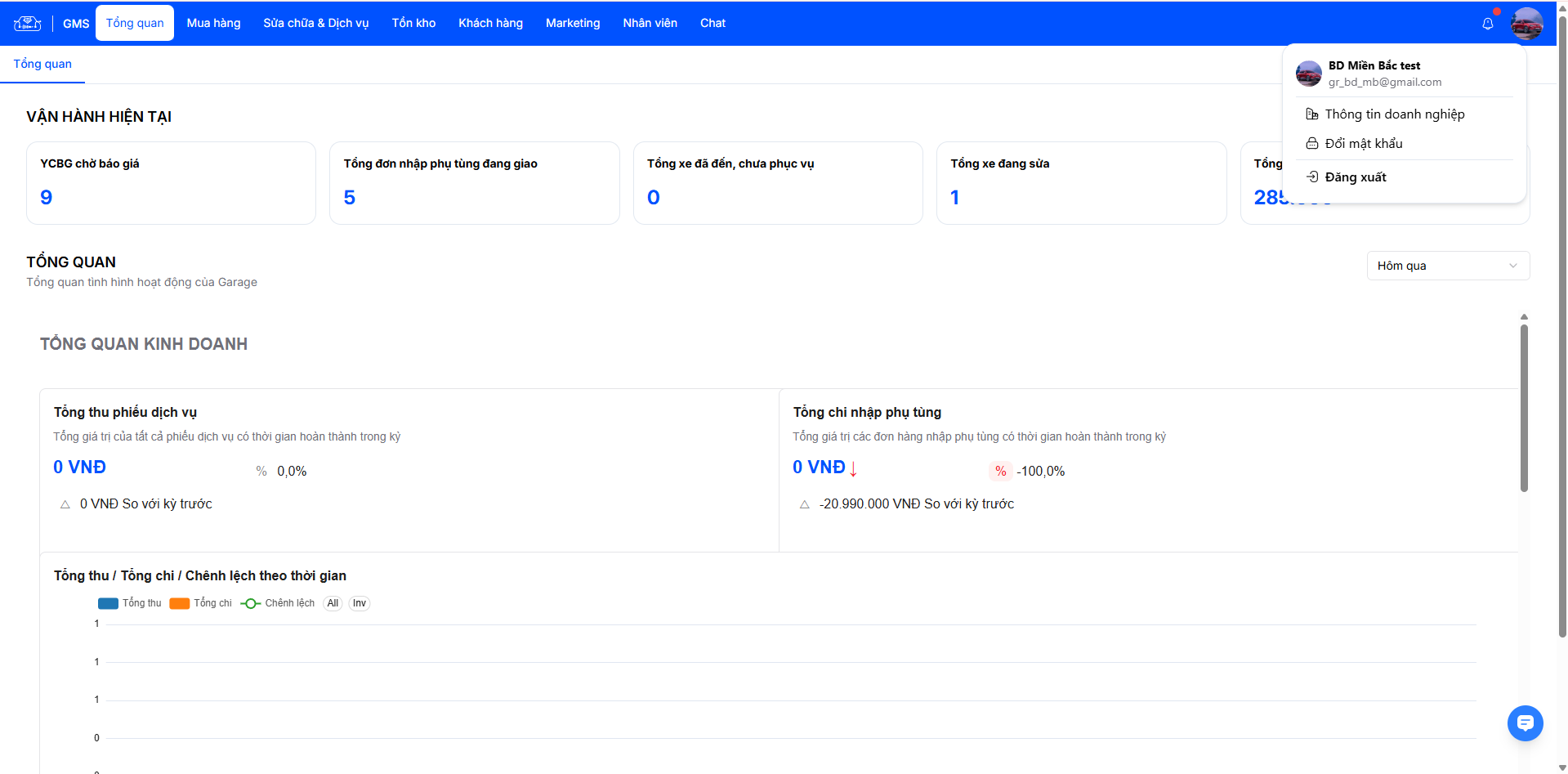
With GMS, garages can adopt a professional management model, standardizing data and optimizing operations without massive technology investments.
Follow the CarDoctor website regularly to update the latest news on the automotive market, technical insights, technology trends, and expert garage management tips.