In this article, CarDoctor experts will share the causes of engine oil leaks and how to fix them, ensuring your car operates at its best!
Oil leaks are a common issue—we’ve all seen dark stains in parking lots or on the road. But what exactly causes these leaks? More importantly, how can you fix them?
In this article, CarDoctor experts will walk you through the main causes of oil leaks and provide practical solutions to keep your vehicle in optimal condition.
What Is the Function of Engine Oil?
A few liters of engine oil circulate inside your car’s engine, performing several essential functions:
-
Prevents rust and wear
-
Lubricates moving parts, reducing friction
-
Cools the engine by preventing excessive heat buildup
-
Seals internal components to prevent energy loss
-
Cleans the engine by removing debris and sludge buildup
Today’s engine oils are a chemical blend of base oil for lubrication and essential additives. These additives help the oil meet modern engine requirements, such as:
-
Improving fuel efficiency
-
Preventing foam buildup
-
Protecting components from corrosion
-
Preventing oil sludge formation
When oil leaks, your engine loses lubrication, which can cause serious problems down the road. That’s why addressing oil leaks promptly is crucial.
Signs Your Car Has an Oil Leak
Oil leaks are usually easy to detect. Here are some common signs to look out for:
-
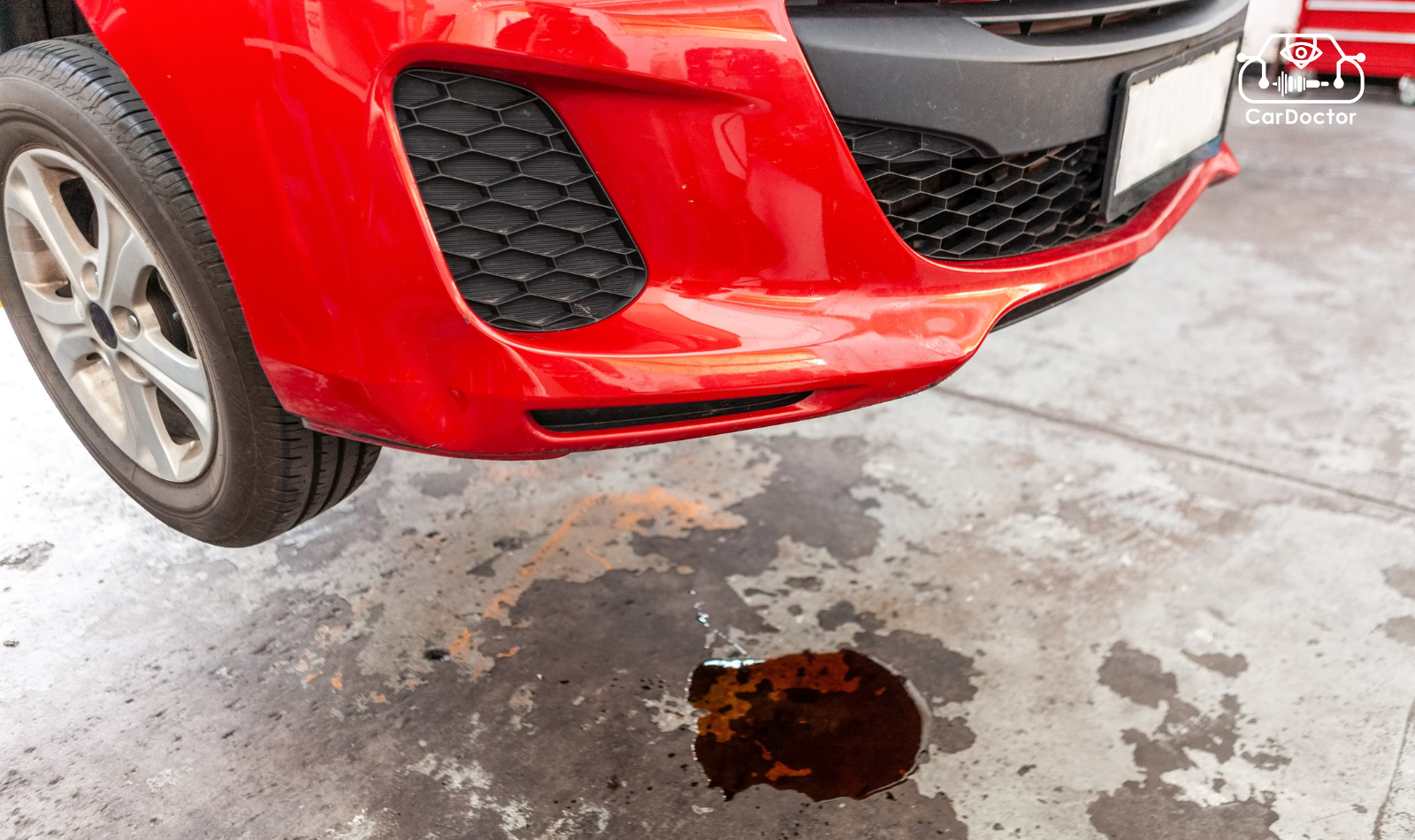
Dark brown puddles under your parked car
-
Unusual oil stains on the undercarriage
-
Oil residue on the engine
-
A strong burning oil smell inside or around your car
How to Check for an Oil Leak
To confirm an oil leak, check your oil level regularly:
-
Park on a level surface and let the engine cool down for 5 to 10 minutes after driving.
-
Remove the dipstick, wipe it clean, reinsert it, and pull it out again to check the oil level.
-
If the oil level is between the halfway mark and the full (F) mark, your oil level is fine.
-
If it’s below halfway, add oil—but don’t overfill it.
-
Monitor your oil level regularly. If you notice a consistent drop, contact CarDoctor for expert advice.
Common Causes of Engine Oil Leaks & How to Fix Them
1. Loose Bolts
Bolts, nuts, and gaskets can loosen over time, creating gaps that allow oil to leak under the car.
Solution: Tighten loose bolts to prevent further leakage.
2. Aged or Hardened Rubber Gaskets
The valve cover gasket seals the connection between the engine cover and the engine block. After 100,000 km, these gaskets harden and shrink, causing oil to leak.
Solution: Inspect the source of the leak and replace the gasket if necessary.
3. Cracked or Damaged Seals
Oil seals endure constant pressure and temperature fluctuations. Over time, they can deteriorate, crack, and leak oil.
Solution: If the oil seal is too old, replace it immediately. The market price for this part typically ranges from 600,000 – 1,000,000 VND per set.
4. Not Changing Oil as Recommended
Over time, oil breaks down, creating sludge and corrosive byproducts. Dirt, metal particles, and combustion byproducts also accumulate, damaging seals and gaskets.
Solution: Follow the manufacturer’s recommended oil change schedule to maintain engine health and prevent leaks.
Don’t Ignore Oil Leaks!
Oil leaks may seem like a minor inconvenience, but they can lead to serious engine damage. If you notice any abnormal signs, contact CarDoctor at Hotline 1900 8183 for a detailed inspection and consultation.
CarDoctor – Driving Innovation in Auto Services
At CarDoctor, we are committed to enhancing vehicle performance and road safety by integrating advanced technology into automotive services. Let’s work together to build a safer and more efficient driving experience