In the automotive service industry, there is a reality that many garage owners realize after operating for a while: being good at repairing cars does not guarantee a steady stream of customers. While technical quality remains the foundation, the customer experience throughout the repair process plays a crucial role in getting customers to choose your garage, return, and refer others.
A customer’s journey may start with a very simple question: “How much will it cost to fix this issue on my car?” But behind that question lies a series of expectations: Will the garage respond quickly? Is the quote transparent? Are parts readily available? How long will the repair take? Will I receive proper consultation and care upon picking up the vehicle? If a garage handles these touchpoints well, the likelihood of building customer trust and securing repeat business increases significantly. Conversely, just a few negative experiences—such as waiting too long for a quote, a vehicle idling due to missing parts, or a lack of repair updates—can cause a customer to consider another workshop.
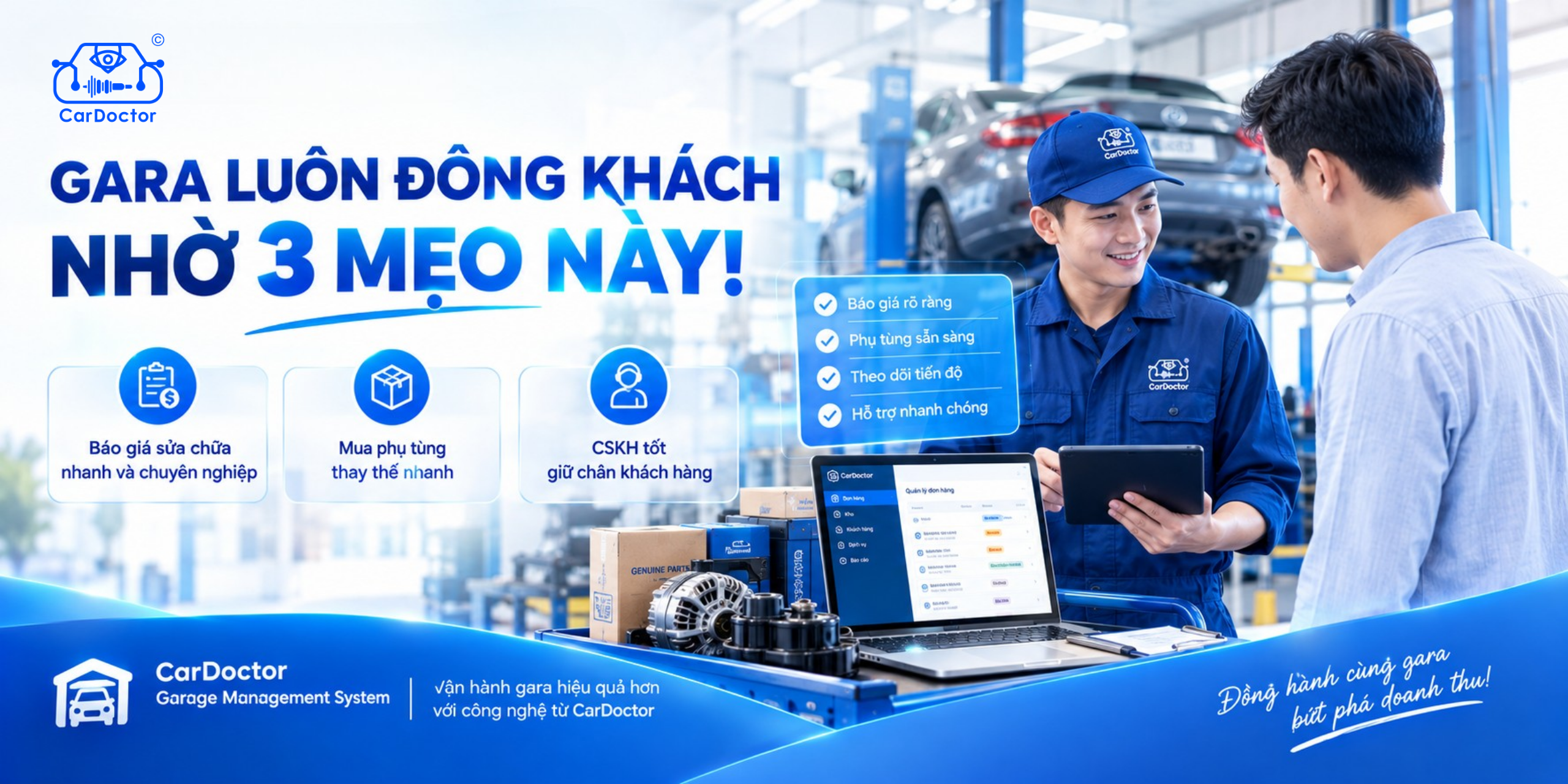
So how can a garage improve customer experience while operating more efficiently? Below are three key areas garages should focus on: fast and professional quotes, rapid spare parts procurement, and excellent customer service.
1. Fast and Professional Quotes: First Impressions Matter Most
When searching for a garage, customers generally do not want to wait too long just to learn the estimated repair cost. This is especially true for unexpected vehicle breakdowns, where customers need repairs done as soon as possible. If a garage takes too long to verify details, inquire about parts pricing, calculate costs, and respond, the customer may switch to another shop that offers quicker advice.
However, fast does not mean superficial. A professional quote must help customers understand what work needs to be done, which items require replacement, which spare parts will be used, and what the total estimated cost is. Clear information makes it easier for customers to make decisions and minimizes potential misunderstandings during the repair process.
Fast Quotation Helps Garages Close Services Quicker
Under traditional workflows, staff may need to retrieve vehicle records, check parts availability, contact suppliers, log prices, and consolidate totals manually. As vehicle volume grows, these small repetitive tasks compound into significant downtime.
Conversely, when information is managed centrally and the quotation process is standardized, staff can handle requests much faster. This is why digitizing repair quotations is becoming a prominent strategy for garages aiming to boost operational efficiency. Rather than providing a single lump sum, garages can build transparent, line-itemed quotes. Customers know exactly what they are paying for, and the garage can seamlessly monitor line items throughout service delivery.
An effective quotation process should aim for three principles: Fast – Clear – Transparent.
2. Rapid Spare Parts Procurement: Keep Cars Moving
Once a customer agrees to the repair, the next challenge arises: Are the spare parts in stock? This is a primary factor directly impacting vehicle turnaround time. A garage may have finished the diagnostic inspection, and technicians may be ready, but if parts have not arrived, the car remains stuck on the lift.
For customers, this means longer wait times. For the garage, it translates to occupied service bays, delayed job card completions, and a reduced capacity to take in new vehicles.
The Faster You Source Parts, the Smoother Your Repair Turnover
In practice, a garage often deals with multiple suppliers. For every requirement, staff must make phone calls, send messages, or place separate requests to check availability and pricing.
As order volume scales, manual tracking becomes increasingly complex. An efficient procurement process should quickly answer basic questions for the garage:
- Where is the required spare part currently located?
- Which supplier has it in stock?
- What is the price?
- What is the estimated delivery timeframe?
- What is the current order status?
When this information is consolidated into a single system, garages can shorten search times and take greater control of their repair schedules.
This is a core value that the CarDoctor ecosystem aims to deliver. By offering solutions that connect garage parts requirements directly with suppliers, the search, inquiry, and purchasing workflow can be organized systematically rather than relying on fragmented communication channels. Crucially for urgent replacements, the speed of sourcing the right part directly affects the vehicle return time.
Faster repairs → Shorter customer wait times → Improved vehicle intake capacity.
This is not merely a purchasing task; it is an essential component of optimizing garage operations.
3. Great Customer Care: Customers Remember How They Were Treated
A technically sound repair is what customers expect. But to turn them into repeat clients, a garage must deliver value beyond the mechanical work.
Put yourself in the car owner’s shoes: After handing over the keys, do they know exactly what work was performed? Is their repair history documented? When is the next maintenance due? If an issue arises post-repair, who do they contact? Does the garage proactively send maintenance reminders? This is where post-service customer care becomes critical.
Documenting Repair History for Superior Customer Care
A simple yet powerful way to enhance customer experience is maintaining complete repair histories. When a customer returns, staff can immediately review past repairs, replaced parts, service dates, and previously resolved issues.
Instead of asking the customer to repeat information, the garage can provide proactive consultations based on existing data. This is particularly valuable for clients who drive frequently and adhere to routine maintenance schedules.
For example, after an oil change, the garage can record the service date and proactively remind the customer when the next service interval approaches. After a tire replacement, logging the details allows for seamless tracking during future visits. These seemingly small touches reassure customers that the garage is genuinely looking after their vehicle long-term, rather than treating the visit as a one-off transaction.
Good Customer Care Does Not Require a Massive Team
A common misconception is that quality customer care requires a large support staff. In reality, process and data structure matter much more. When customer details, vehicle profiles, repair histories, appointments, and service logs are managed centrally, manual workloads drop significantly. Staff no longer waste time searching for records or taking notes across disparate places, while garage owners can easily oversee customer status and workshop activities.
This is why Garage Management Systems (GMS) are playing an increasingly vital role in operational digitization.
4. How the Three Elements Interconnect
These three factors do not exist in isolation:
- Fast quotes shorten the gap between customer inquiries and service confirmations.
- Rapid parts procurement reduces vehicle downtime and keeps repair schedules on track.
- Proactive customer care maintains relationships after handover, laying the groundwork for future return visits.
The complete customer journey flows as follows:
Customer Request → Garage Inspection → Fast Quote → Customer Confirmation → Parts Sourcing & Purchase → Repair Execution → Vehicle Handover → Record Logging → Post-Service Care.
If only one link is optimized while the rest rely on manual processes, overall efficiency will remain constrained. For instance, if a garage issues a quote instantly but takes 3 to 4 days to source parts, the customer still faces long delays. Likewise, if the repair work is top-tier but the shop fails to log history or follow up, long-term relationship-building opportunities are lost.
Therefore, the main objective is not just improving individual tasks, but creating a seamless, end-to-end operational workflow.
5. Operational Digitization: The Next Step to Better Service
As vehicle volume grows, customer bases expand, and spare part catalogs diversify, managing a garage using paper logs, Excel spreadsheets, or disconnected tools becomes increasingly unmanageable. This is where garage management platforms help businesses standardize their workflows.
With a GMS, a garage can oversee multiple operations within a single unified platform—from vehicle intake, appointment scheduling, and job cards to parts purchasing, inventory control, billing, and repair history tracking. The core value lies not in simply acquiring software, but in connecting every operational phase into a cohesive process.
Centralizing data allows shop owners to monitor workshop activity effortlessly, provides staff with efficient tools to handle daily tasks, and ensures customers receive prompt, transparent service. Furthermore, seamless integration with parts suppliers gives garages greater agility when sourcing items—especially when seeking multiple price quotes or fulfilling urgent requirements on short notice.
6. A Busy Garage Needs More Than Just Advertising
Advertising can make customers aware of your garage. But to make them stay, return, and refer others, their actual experience is what matters long-term.
A garage can start with very actionable changes:
- Issue quotes faster.
- Source spare parts quicker.
- Provide clearer repair updates.
- Maintain complete vehicle histories.
- Engage in proactive customer care.
When these elements are implemented in sync, a garage can handle higher vehicle volumes while building a professional brand image and fostering long-term customer loyalty.
In an increasingly competitive automotive service market, a garage’s edge extends beyond technical expertise. Service speed, managerial capability, and customer experience will increasingly dictate growth potential. Often, keeping a garage “busy” does not require spending heavily on ad campaigns—it starts by refining daily touchpoints: a fast quote, a timely spare part, and a care experience good enough to keep customers coming back.
CarDoctor – Accompanying Garages on Their Digital Transformation Journey
With an ecosystem tailored for the automotive service industry, CarDoctor develops solutions that empower garages to connect operational management, parts sourcing, and customer care on a single tech platform. Within this suite, the GMS (Garage Management System) helps garages manage operations centrally, bring transparency to workflows, and boost overall efficiency.
By standardizing processes and optimizing data management, garage owners can dedicate more time to what matters most: serving customers and building a sustainable business.
👉 Follow the CarDoctor website regularly for the latest automotive insights, technology trends, and garage management expertise!