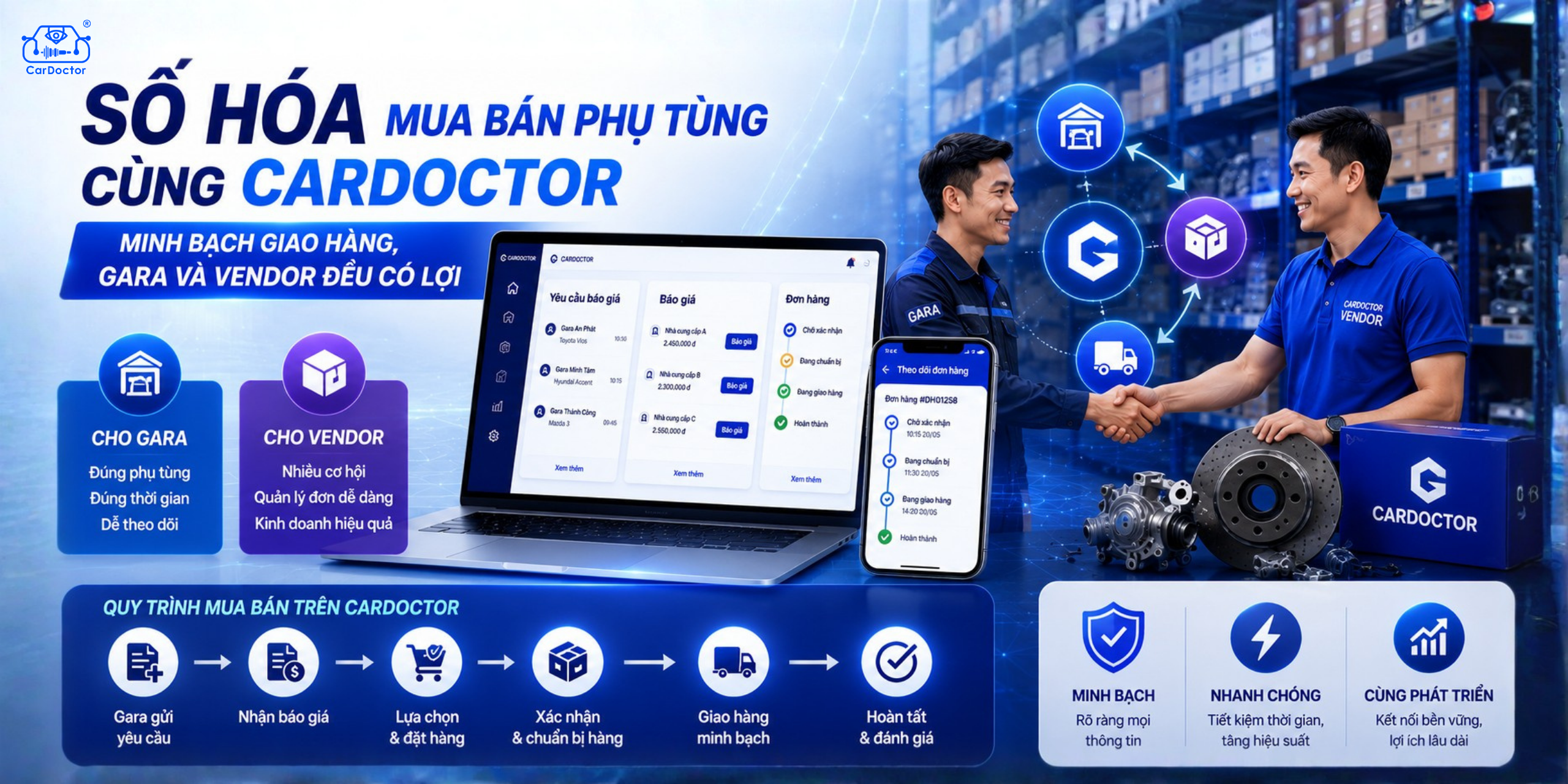
In an increasingly competitive automotive service market, the requirements for garages extend beyond repair quality to operational efficiency, cost control, and data transparency. In practice, however, many garages still struggle with fragmented management across departments—procurement, inventory, service, and accounting—leading to financial leakage and a lack of overall oversight.
The emergence of operational management platforms like GMS (Garage Management System) is helping garages solve these challenges step-by-step by digitalizing and synchronizing entire workflows into a single, unified system.
A Comprehensive Operational Management Platform for Garages
GMS was developed as an all-in-one platform, allowing garages to maintain end-to-end control from procurement and inventory management to service operations and accounting.
Unlike traditional methods or disconnected software, GMS synchronizes data across all departments, minimizing information discrepancies and enhancing oversight. All activities are recorded in real-time, enabling garage owners to monitor operations and make swift decisions, even when not physically present.
Notably, CarDoctor has officially launched GMS 2.0—an upgraded version with superior enhancements refined through real-world deployments. GMS 2.0 focuses on optimizing user experience, increasing processing speeds, and adding specialized features to help garages operate more smoothly, maintain tighter control, and stay ready for future growth.
1. Optimizing Quotation & Parts Procurement
A standout feature of GMS is its ability to revolutionize the parts quotation and procurement process. Instead of manually contacting multiple suppliers and comparing quotes, the system allows garages to request quotes and place orders directly on the platform with full transparency. This not only saves time but also significantly reduces errors during the purchasing phase. Centralized management further assists garages in controlling input costs and preventing over-stocking or incorrect orders.
2. Real-Time Inventory Management
Inventory is often one of the most difficult areas to control. Lack of synchronization between stock-in, stock-out, and on-hand levels often leads to loss or unnecessary dead stock. GMS solves this by providing a real-time inventory management system. Every stock movement is updated instantly, ensuring all relevant departments have accurate information. Consequently, garages can minimize stagnant inventory, optimize cash flow, and ensure parts are always available when needed.
3. Vehicle-Level Repair Status Tracking
In many operations, tracking repair progress relies on verbal communication between departments, which can lead to delays or information gaps. With GMS, every vehicle is assigned to a specific service workflow—from reception and diagnostics to repair and final handover. The status of each task is updated continuously, allowing managers and technicians to track progress easily. This enhances internal coordination and improves the customer experience through clear, transparent updates.
4. Personnel Management & Granular Access Control
GMS allows garages to establish a clear Role-Based Access Control (RBAC) system for positions such as Owner, Manager, Accountant, Warehouse Keeper, and Technician. Each role only accesses functions relevant to their tasks, reducing the risk of errors and increasing operational security. Additionally, the system supports performance tracking for each staff member, helping garages evaluate and optimize their human resources.
5. Unified Data Synchronization
One of the primary benefits of GMS is the ability to sync all operational data onto a single platform. From procurement and inventory to service and accounting, all information is linked and updated in real-time. This eliminates data silos, reduces discrepancies, and improves management accuracy. Owners can easily access comprehensive reports on revenue, expenses, and inventory without manual consolidation from multiple sources.
6. Granular Cost and Profit Control per Service
GMS provides the ability to track detailed costs and profits for every specific repair service. By monitoring parts costs, labor expenses, and retail pricing, garages can accurately assess the profitability of each service. This enables owners to make informed decisions regarding price adjustments, cost optimization, or process improvements—a vital factor for sustainable growth in a high-competition environment.
The Inevitable Trend in Modern Garage Management
The adoption of platforms like GMS reflects the powerful digital transformation trend within the automotive service industry. As the market scales and operational demands rise, manual management is no longer sufficient. Modern garages require tools that optimize workflows, ensure data transparency, and boost overall efficiency. GMS, with features designed specifically for real-world operations, is a leading solution helping garages adapt to this trend.
Conclusion
The features of GMS go beyond simple management; they transform how garages operate toward a more professional and efficient model. From optimizing procurement and inventory to personnel management and profit tracking, GMS delivers a synchronized and transparent operational system—the key to enhancing competitive advantage in today’s market.
👉 Follow the CarDoctor website for the latest automotive market news, technical insights, technology trends, and expert garage management experiences.