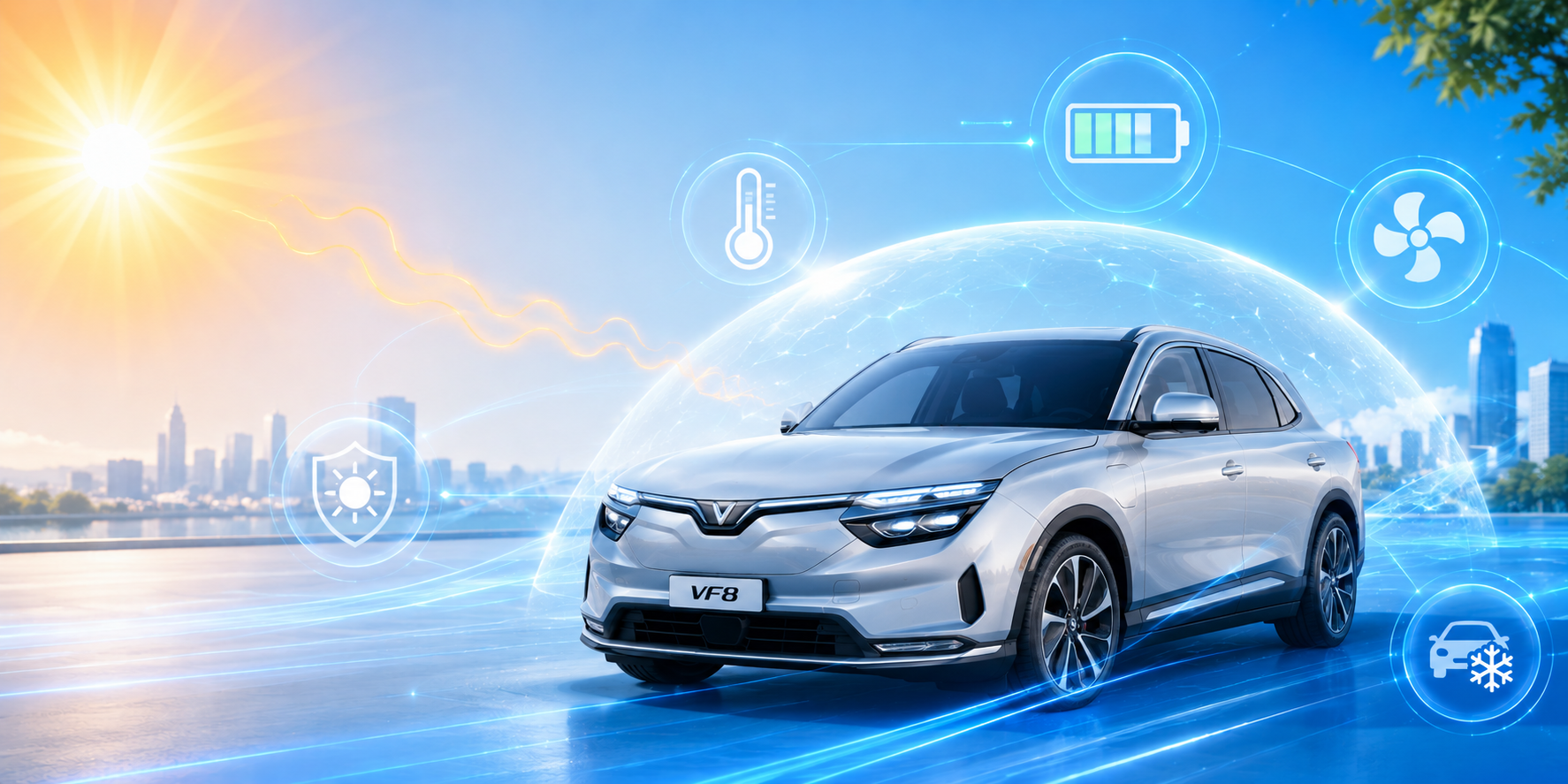
Summer temperatures soaring above 40°C represent the ultimate “stress test” for electric vehicles (EVs). Without proper EV maintenance and strategic battery care, owners face more than just a drop in driving range; they risk compromising the lifespan of their expensive battery systems. Explore our “5-star” guide to professional EV care to ensure peak performance and maximum energy efficiency throughout the summer season.
1. Why Critical EV Battery Maintenance is Vital in Summer
An EV’s battery pack, situated beneath the chassis, is comprised of thousands of individual lithium-ion cells. During operation in extreme heat, the combination of high ambient temperatures and the internal heat generated by electrical discharge can push the battery pack beyond its safe thermal threshold.
Summer EV battery maintenance is essentially about ensuring the Liquid Cooling system functions flawlessly. If this system fails or coolant levels deplete, the battery will overheat, triggering “Throttling” – a state where the vehicle automatically limits power output to protect the hardware. This results in sluggish performance and significantly slower charging speeds. Proper care helps maintain a high State of Health (SOH), potentially saving owners thousands of dollars in long-term replacement costs.
2. Five “5-Star” EV Maintenance Tips for Electric Cars
To keep your electric vehicle in pristine condition, follow this professional-grade maintenance protocol:
2.1. Optimize Charging and Leverage “Pre-conditioning”
In summer, battery temperatures often exceed the ideal window for high-current intake, particularly at DC Fast Charging stations.
The Solution: Utilize the Pre-conditioning feature via your car’s infotainment system. By setting your charging station as the destination in the native GPS, the vehicle will intelligently regulate the battery temperature before arrival, ensuring it is ready for rapid charging without damaging the cells. Furthermore, aim to cap fast charging at 80% to avoid the extreme heat buildup that occurs during the final stage of the charging cycle.
2.2. Inspect Air Conditioning and Cabin Air Filters
Unlike internal combustion engines, an EV’s climate control draws energy directly from the high-voltage battery. An inefficient system (due to clogged filters or low refrigerant) will consume double the energy to cool the cabin, directly slashing your driving range.
The Solution: Replace cabin air filters every 10,000km. Keeping the cabin and battery cooling pathways clean is the cornerstone of saving energy and protecting passenger health during oppressive heatwaves.
2.3. Tire Pressure Management and Specialized EV Tires
EVs are significantly heavier than their gasoline counterparts due to the massive battery pack. On road surfaces that can hit 60°C, tire pressure fluctuates wildly. Under-inflated tires increase rolling resistance, forcing the motor to consume 5-10% more energy.
The Solution: Strictly maintain tire pressure according to the manufacturer’s specifications found on the door jamb. If possible, opt for specialized EV Tires, which feature heat-resistant rubber compounds and low rolling resistance to maximize your range.
2.4. Smart Parking and Exterior Protection
Extreme heat can interfere with the sensitive sensors (Radar, Camera) located around the vehicle, potentially causing faults in Advanced Driver Assistance Systems (ADAS).
The Solution: Always prioritize underground parking or shaded areas. If outdoor parking is unavoidable, use high-quality reflective sunshades for the windshield and premium ceramic window tinting. This protects the interior electronics and prevents the HVAC system from overworking when you start your next journey.
2.5. Monitor Battery Coolant Levels
Unlike electric scooters, electric cars feature complex thermal management for both the battery and the motor. This fluid must be checked for stability and purity periodically.
The Solution: During scheduled summer EV maintenance check-ups, have a technician verify the coolant concentration. Ensure there are no leaks in the underbody hoses—areas highly susceptible to damage from road debris or underside scrapes.
3. How to Drive an EV for Maximum Energy Efficiency in the Heat
- Utilize Eco Mode and High Regenerative Braking: During summer, prioritize “Eco” mode to allow the system to optimize energy distribution between the AC and the motor. High regenerative braking reduces the load on mechanical brakes, preventing brake overheating during descents or in heavy city traffic.
- Pre-cool the Vehicle Before Departure: While the car is still plugged in at home or at a charging station, activate the climate control via your smartphone app. This allows the car to draw cooling energy from the grid rather than the battery, preserving your full range for the actual drive.
4. Critical Warning Signs: When to Seek Professional Service
Never ignore alerts on your digital cockpit. Take your vehicle to a service center immediately if you notice:
- “Battery Temperature High” Warning: This indicates the thermal management system is failing or overwhelmed.
- Significant DC Charging Slowdown: The vehicle refuses to accept a high-current charge despite a functional station (usually due to battery thermal saturation).
- Abnormal Fan Noise: The cooling fans run at maximum intensity with loud noises while the cabin remains warm.
5. Essential Summer EV Care Checklist (For Owners)
- Charging: Prioritize slow AC charging overnight; use DC fast charging only when necessary.
- Pre-cooling: Turn on the AC while the vehicle is still plugged in.
- Tires: Check tire pressure weekly when the tires are “cold” (before driving).
- Cooling System: Monitor battery coolant levels after long-distance trips.
- Software: Keep the vehicle’s firmware updated to the latest version for optimized thermal algorithms.
Conclusion
Owning an electric vehicle is an investment in future mobility. Understanding and implementing these professional EV maintenance and battery care steps during the summer months not only ensures peace of mind on every journey but also sustainably protects the long-term value of your asset.