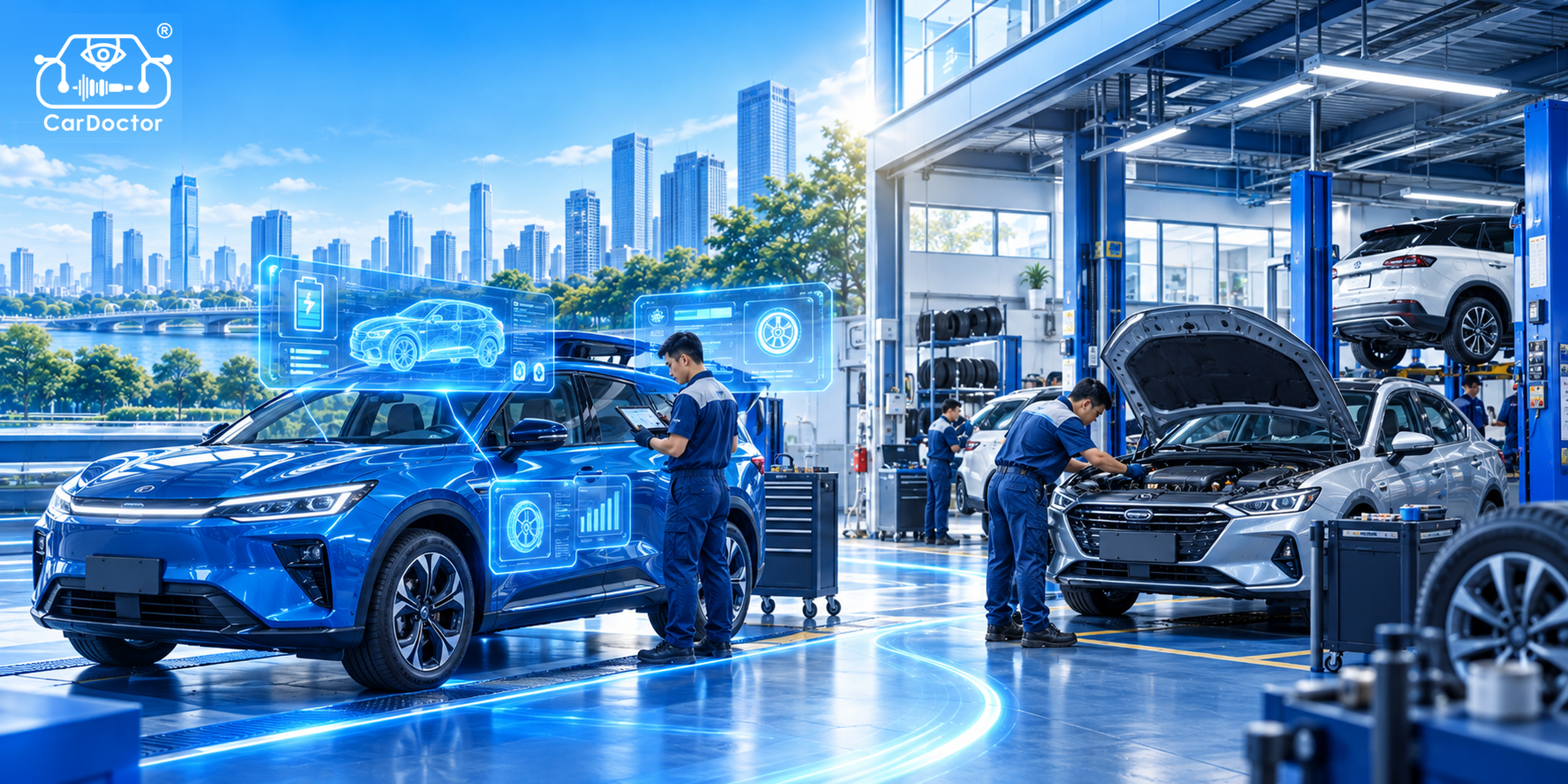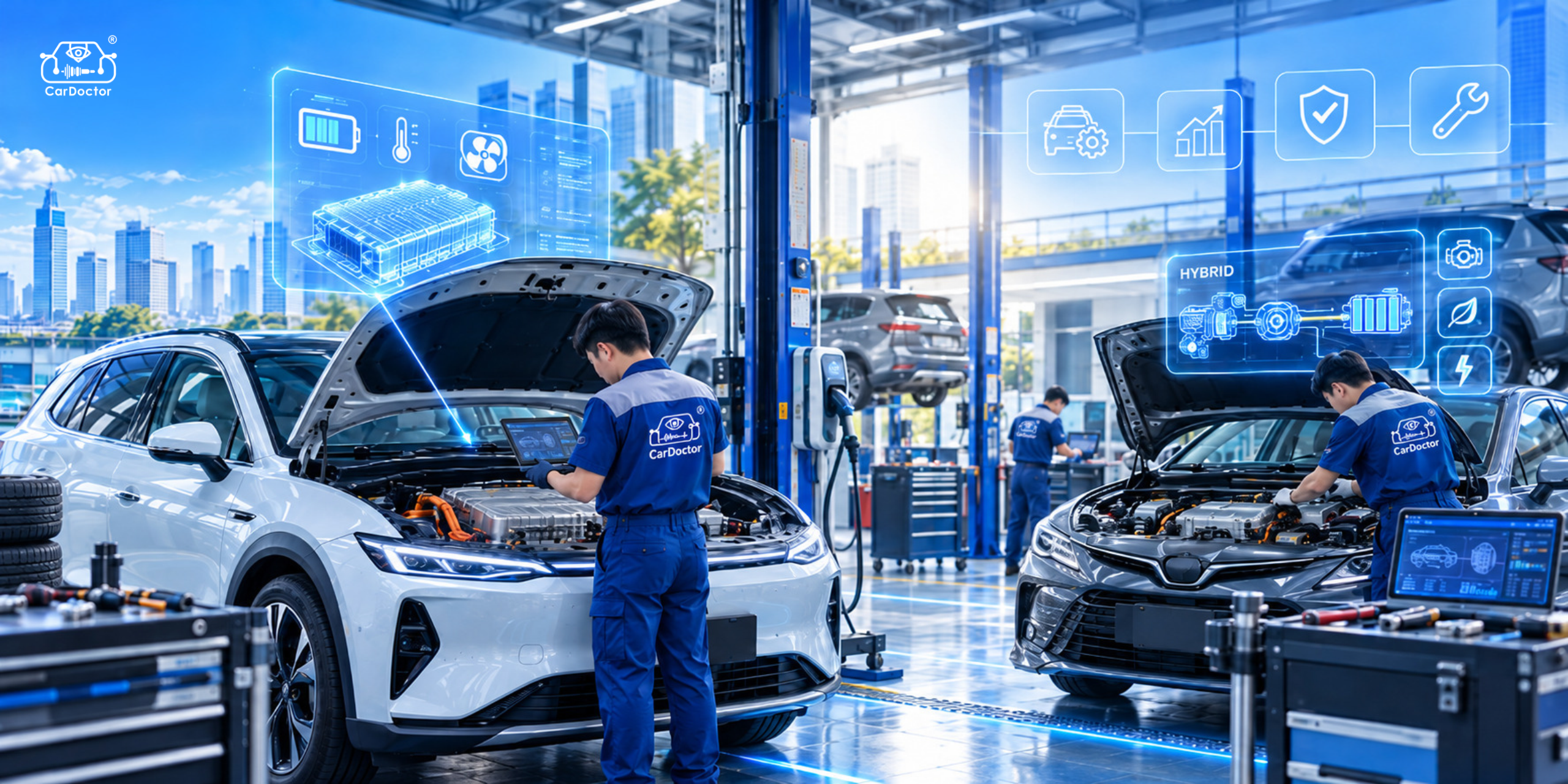
The rapid increase in hybrid and electric vehicles in Vietnam is gradually transforming the automotive aftermarket. While repair activities previously focused primarily on internal combustion engines and traditional mechanical systems, garages now face new requirements for electronic diagnostics, high-voltage electrical safety, battery maintenance, and technical management. Against this shift, what important changes should garages make to adapt and maintain their competitiveness?
1. Growth in Hybrid and Electric Vehicles: The Automotive Aftermarket Enters a Period of Transformation
Vietnam’s automotive market is witnessing a noticeable shift in its vehicle composition. Alongside gasoline and diesel-powered vehicles, hybrid and electric cars are becoming increasingly common, offering consumers new choices.
According to data released by the Vietnam Automobile Manufacturers’ Association (VAMA), its members sold 16,057 hybrid vehicles during the first nine months of 2026, an increase of 64% compared with the same period in 2025. In September 2026 alone, hybrid vehicle sales among these manufacturers reached 2,168 units.
For fully electric vehicles, VinFast announced preliminary deliveries of 177,697 vehicles in the Vietnamese market during the first nine months of 2026, including 23,624 vehicles in September. These figures represent the manufacturer’s own deliveries rather than the entire electric vehicle market.
These numbers indicate that vehicle electrification is no longer a distant trend but is directly influencing the domestic automotive market.
However, the development of hybrid and electric vehicles is not only transforming vehicle sales and distribution. Its longer-term impact also lies in the aftermarket, where garages must maintain, repair, and ensure the operational performance of vehicles throughout their service lives.
For traditional garages, this represents both an opportunity to expand their services and a challenge in terms of technical capabilities.
Certain familiar maintenance tasks may gradually decrease for fully electric vehicles, while demand for electrical system diagnostics, thermal management inspections, control software checks, and assessments of electronic components is likely to increase.
This creates a need to transition from a predominantly mechanical repair model to a maintenance approach that combines mechanical engineering, electrical and electronic systems, software, and specialized safety procedures.
2. Garages Need to Clearly Understand the Differences Between Hybrid and Electric Vehicles
Before changing repair procedures, garages must accurately identify the type of vehicle they are receiving.
Not all vehicles collectively referred to as electrified vehicles have the same structure or maintenance requirements.
The market currently offers various powertrain configurations, including mild hybrid electric vehicles (MHEVs), conventional hybrid electric vehicles (HEVs), plug-in hybrid electric vehicles (PHEVs), and battery electric vehicles (BEVs).
Hybrid Vehicles: Combining Mechanical and Electrical Systems
For hybrid vehicles that use both an internal combustion engine and an electric motor, maintenance activities must address both powertrain systems.
Tasks such as changing engine oil, replacing filters, and maintaining cooling systems and mechanical components must still be performed according to the manufacturer’s recommendations.
In addition, garages must understand hybrid battery systems, power converters, electric motors, and the operating mechanisms that coordinate the internal combustion engine with the electrical system.
In particular, the gasoline engine in many hybrid models can start automatically when necessary. Therefore, observing that the engine is not running does not mean the vehicle is in a safe condition for repair.
Battery Electric Vehicles: Fewer Engine Maintenance Tasks but Different Technical Requirements
Unlike hybrid vehicles, battery electric vehicles do not use an internal combustion engine to generate propulsion.
Therefore, these vehicles do not require engine oil changes, spark plug replacements, or many maintenance procedures associated with traditional powertrains.
However, electric vehicles still require periodic inspections of brakes, tires, suspension systems, air conditioning, battery cooling systems, and related electrical and electronic components.
According to the Alternative Fuels Data Center under the U.S. Department of Energy, battery electric vehicles generally require less scheduled maintenance than internal combustion engine vehicles because they have fewer moving parts and fewer fluids that need replacement. Meanwhile, hybrid vehicles retain many maintenance requirements similar to those of conventional vehicles.
This demonstrates that garages cannot apply a single maintenance checklist to every vehicle type.
Instead, inspection procedures must be based on the vehicle’s configuration, technical specifications, and the maintenance schedule prescribed by the manufacturer.
3. The First Change: Standardizing Vehicle Reception and Inspection Procedures
For traditional vehicles, the reception process at many garages usually begins with recording the vehicle’s condition, checking abnormal symptoms, and assigning a technician.
For hybrid and electric vehicles, this process needs an additional step to identify the powertrain technology and assess technical risks from the outset.
Accurately Identifying Vehicle Types and Electrical System Conditions
Service reception personnel should record vehicle information, including the manufacturer, model, version, production year, Vehicle Identification Number (VIN), and powertrain type.
This information provides the basis for consulting repair documentation, maintenance schedules, and corresponding safety precautions.
In addition to the symptoms reported by customers, garages should check warning messages displayed on the instrument cluster, charging conditions, recent repair history, and unusual signs related to electrical systems.
In particular, for vehicles that have experienced flooding, accidents, or collisions involving the battery installation area, risk assessment should be prioritized before the vehicle enters the normal repair process.
Signs such as battery deformation, fluid leakage, smoke, unusual noises, or abnormal temperature increases must be handled according to emergency response procedures specifically designed for electrified vehicles.
Classifying Work According to Risk Levels
Not every electric vehicle maintenance task requires intervention in the high-voltage system.
For example, interior cleaning or windshield wiper replacement involves a different level of risk compared with repairing a battery pack, inverter, or powertrain control system.
Therefore, garages need to classify repair orders according to their level of exposure to high-voltage electrical systems, safety conditions, and the technical competencies of assigned personnel.
This approach helps prevent technicians from being assigned tasks beyond their training while improving risk control within the workshop.
4. High-Voltage Electrical Safety Must Become a Mandatory Requirement in Repair Procedures
One of the most significant differences between electrified vehicles and conventional vehicles is the presence of high-voltage electrical systems.
Components such as traction battery packs, electric motors, inverters, and charging systems may operate at dangerous voltage levels.
If not handled correctly, contact with these components can cause electric shock, electrical arcing, or other serious incidents.
According to I-CAR, an automotive repair technical training organization, work involving high-voltage systems in electric and hybrid vehicles must be performed by appropriately qualified personnel who follow the manufacturer’s safety procedures.
Do Not Substitute Traditional Electrical Disconnection Procedures for Specialized Instructions
On internal combustion engine vehicles, technicians are often accustomed to switching off the ignition or disconnecting the 12V battery before carrying out certain tasks.
However, for hybrid and electric vehicles, these actions do not automatically guarantee that the entire high-voltage system has been safely isolated.
Some components may continue to store electrical energy even after the vehicle has been switched off.
Therefore, when a task requires high-voltage system isolation, qualified technicians must follow the manufacturer’s prescribed procedures, including preventing unintended reactivation and verifying electrical safety using appropriate equipment.
High-voltage cables should not be disconnected, battery packs opened, or components accessed without first assessing their safety.
Equipping Personnel and Organizing Work Areas
Garages planning to develop technical services involving high-voltage systems need to establish appropriate equipment arrangements.
These may include certified insulating gloves, insulated tools, measuring instruments with suitable safety ratings, warning signs, and personal protective equipment.
At the same time, work areas must be organized to prevent unauthorized personnel from approaching vehicles undergoing high-voltage electrical work.
For vehicles involved in serious accidents or showing signs of battery abnormalities, garages must follow isolation, monitoring, and emergency response arrangements consistent with manufacturer guidance and the instructions of relevant emergency response professionals.
Safety must be regarded as an integral part of operational procedures rather than solely the responsibility of individual technicians.
5. Diagnostic Procedures Must Shift from Mechanical Experience to Electronic Data Analysis
In modern vehicles, many operating functions are managed through sensor systems and electronic control units.
This is particularly evident in hybrid and electric vehicles, where operational performance depends heavily on coordination between battery systems, electric motors, thermal management, and control software.
Symptoms such as reduced vehicle power, charging failure, or electrical system warnings may result from several different causes.
Replacing components based on assumptions can generate additional costs without resolving the actual problem.
Incorporating Data Inspection and Root Cause Verification
For vehicles that support these functions, garages should use compatible diagnostic equipment to read fault codes and operating data from relevant control units.
Important information may include battery temperature, State of Charge (SOC), Battery Management System (BMS) data, and the operating status of control systems.
However, access to this information depends on the diagnostic equipment, software, vehicle model, and technical access permissions provided by the manufacturer.
It should be noted that SOC data is not equivalent to State of Health (SOH). Assessing battery degradation requires methods and data appropriate to each battery system.
After repairs, garages must also perform verification procedures according to technical documentation rather than merely clearing fault codes or relying on the disappearance of warning lights.
This is an important change that can reduce the risk of repeated repairs and improve the quality of vehicle handover.
6. Battery Maintenance and Thermal Management Systems: Areas Requiring Greater Attention
The traction battery is one of the most important components in hybrid and electric vehicles.
However, battery maintenance does not mean that garages must disassemble or repair internal battery modules.
For many vehicles, routine maintenance primarily focuses on evaluating system conditions through diagnostic data and inspecting related components.
One particularly important area is the thermal management system.
During charging, discharging, and vehicle operation, batteries may generate heat. Cooling systems help maintain suitable operating conditions and support battery longevity.
Depending on the vehicle configuration, these systems may use liquid coolants, air cooling, or other thermal control solutions.
According to the Australian Government’s guidance on electric vehicle maintenance, inspection of battery cooling systems and coolant conditions is among the maintenance tasks that should be considered according to each vehicle’s requirements.
Garages should pay attention to signs such as temperature warnings, abnormal cooling system operation, fluid leaks, or reduced vehicle performance.
Coolant selection, replacement methods, and maintenance intervals must follow the manufacturer’s technical documentation. The same coolant type or procedure should not automatically be applied to all electric vehicles.
For tasks exceeding their technical capabilities, garages should transfer vehicles to appropriately qualified service providers rather than independently interfering with high-voltage battery packs.
7. Traditional Maintenance Tasks Remain Important but Require Adjustments to Inspection Methods
The development of hybrid and electric vehicles does not eliminate all traditional automotive repair services.
In reality, many components, including brakes, tires, steering systems, suspension, air conditioning, and vehicle bodywork, still require inspection, maintenance, and replacement when necessary.
However, the operating characteristics of electrified vehicles may change wear patterns and inspection methods.
Braking Systems: Reduced Wear Does Not Mean Maintenance Is Unnecessary
Many hybrid and electric vehicles use regenerative braking to recover a portion of the energy generated during deceleration.
This mechanism reduces the frequency of friction brake usage under certain operating conditions, potentially extending brake pad life.
Nevertheless, brake discs, calipers, brake fluid, and hydraulic components still require periodic inspection.
On vehicles where friction brakes are used less frequently, checking for corrosion, seized braking mechanisms, and abnormal operation is also important.
Tires and Suspension: Avoid Applying Fixed Replacement Intervals
For electric vehicles, vehicle weight, torque characteristics, and driving habits can influence tire wear.
However, not all electric vehicles experience faster tire wear than internal combustion engine vehicles.
Garages should evaluate tires based on their actual condition, inflation pressure, tread depth, uneven wear patterns, and the technical specifications of each vehicle model.
Suspension systems, shock absorbers, and steering mechanisms must also be inspected according to manufacturer requirements and operating conditions.
Air Conditioning and Thermal Systems
On certain electric vehicle models, the air conditioning system may be associated with thermal management functions for the battery pack or electronic components.
Therefore, air conditioning repairs must follow the vehicle’s specific technical configuration, including requirements for refrigerants, compressor oils, and servicing equipment.
It should not be assumed that air conditioning maintenance procedures for gasoline vehicles can be applied unchanged to every electric vehicle model.
8. Technician Training and Equipment Investment: A Suitable Roadmap Is Essential
To adapt to electrified vehicles, garages need to improve the capabilities of their technical teams. However, training should not be limited to learning how to use diagnostic scanners or recognizing new components.
Personnel must understand the operating principles of powertrain systems, recognize high-voltage electrical risks, consult technical documentation, and determine the limits of the tasks they are qualified to perform.
According to the electrified vehicle safety certification system of the National Institute for Automotive Service Excellence (ASE), personnel can be classified into different competency levels, ranging from electrical safety awareness to technicians trained to perform specialized work on high-voltage systems.
This provides a useful reference model for garages developing internal training programs and assigning tasks appropriately. However, ASE certification does not replace legal requirements, technical guidance, or professional conditions applicable in Vietnam.
Which Equipment Should Garages Invest in First?
Not every garage has the financial capacity to immediately invest in battery repair equipment, advanced diagnostic systems, or specialized high-voltage tools.
Therefore, before purchasing equipment, garage owners need to evaluate the frequency of hybrid and electric vehicles entering their workshops, the intended service categories, potential return on investment, and the operating capabilities of their personnel.
In the initial stage, upgrading diagnostic scanners compatible with the vehicle models currently being serviced, obtaining official repair documentation, and establishing safety identification procedures may deliver greater practical value than making widespread investments.
Specialized high-voltage equipment should only be acquired alongside appropriate training programs, risk control procedures, and emergency response arrangements.
For tasks that garages are not yet qualified to perform, they can cooperate with specialized technical service providers to ensure service quality and operational safety.
9. Digitizing Maintenance Procedures: A Foundation for Servicing Multiple Vehicle Technologies
When a garage simultaneously services gasoline, diesel, hybrid, and electric vehicles, managing operations solely through notebooks or verbal communication can create difficulties.
Each vehicle has different maintenance schedules, material requirements, technical specifications, and risk levels.
If information is not properly recorded, garages may overlook maintenance tasks, use incompatible spare parts, or assign personnel who are not appropriately qualified.
Therefore, digitizing service management activities is becoming an important development direction for aftermarket service providers.
Standardizing Data from the Moment of Vehicle Reception
An effective management process should begin with creating a vehicle profile containing information such as the VIN, powertrain configuration, maintenance history, mileage, and previously recorded problems.
Using this profile, garages can establish inspection checklists suitable for each vehicle type, monitor repair progress, and record spare parts used.
For hybrid or electric vehicles, service records may also include diagnostic results, system warnings, completed work, and technical recommendations.
Information storage must comply with appropriate data protection principles and access control arrangements.
Connecting Technical Data with Business Management
In addition to supporting technical operations, garage management systems help business owners monitor operational efficiency.
For example, garages can analyze average repair times by vehicle category, revenue by service type, customer return rates, and labor costs.
These data support decisions on whether to expand electric vehicle services or continue focusing on existing strengths.
For customers, having clear service records, transparent quotations, and consistently stored warranty information also helps improve the service experience.
Over the longer term, a garage with well-organized data can expand its operations without relying entirely on the management experience of individual employees.
10. Where Should Garages Begin Their Transformation?
With the increasing adoption of electrified vehicles, one strategic investment mistake is assuming that garages must quickly acquire every new technology to avoid being left behind.
In reality, transformation should take place in stages, based on business scale and customer demand.
Proposed Transformation Roadmap for Garages
| Phase | Key Actions |
|---|---|
| 0–3 months | Review the volume of hybrid and electric vehicles received, assess workforce skills, and establish risk identification guidelines. |
| 3–6 months | Provide technical training, standardize vehicle reception procedures, classify repair tasks, and upgrade suitable diagnostic tools. |
| 6–12 months | Pilot new services within existing capabilities, evaluate investment effectiveness, and expand technical partnerships. |
These timeframes are indicative and may be adjusted according to each garage’s resources and operating characteristics.
The first step is assessing current operations. Garage owners need to determine the proportion of electrified vehicles among all vehicles received, the services customers frequently request, and their current capacity to meet these demands.
The second step is selecting a service scope that can be implemented safely. Garages specializing in tires, chassis, suspension, or vehicle detailing can still participate in the electric vehicle aftermarket without necessarily repairing high-voltage battery systems directly.
The next step involves training personnel, acquiring equipment, and standardizing working procedures. Major investments should be evaluated based on actual demand and the ability to utilize the equipment effectively.
Finally, garages should establish partnerships with spare parts suppliers, training organizations, and facilities with advanced repair capabilities. This helps expand their service scope while maintaining control over quality and risks.
11. Conclusion: Electrification Does Not Eliminate the Role of Garages, but It Is Changing How They Operate
The development of hybrid and electric vehicles is creating an important period of transformation for Vietnam’s automotive aftermarket.
Many traditional maintenance tasks will continue to exist, but inspection methods, diagnostic requirements, and safety standards must be adjusted to accommodate new vehicle technologies.
For garages, the challenge is not simply purchasing additional machinery or expanding their repair service portfolios. More importantly, it is about developing appropriate operational capabilities, from vehicle reception, risk identification, and technician assignment to quality inspection and vehicle handover.
In a changing automotive aftermarket, competitive advantages will increasingly belong to garages capable of combining technical expertise, safety procedures, diagnostic technology, and professional service management.
Garages that proactively prepare at an early stage will be better positioned to adapt to changes in vehicle composition while creating opportunities to develop new services in the years ahead.