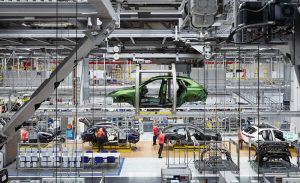
The global car market, including Vietnam, has experienced significant disruptions in recent years due to a shortage of components, particularly semiconductor chips. As of April 2025, although the situation shows signs of improvement compared to the peak crisis period from 2021 to 2023, the issue of parts shortages is far from resolved. This continues to impact delivery times, causing many buyers to wait longer than expected for their vehicles.
Current state of automobile parts shortage in 2025
The main cause of the shortage still stems from the heavy reliance on global supply chains, especially semiconductor chips, which are the “heart” of modern vehicles, from traditional gasoline cars to electric vehicles. Although major chip manufacturers like TSMC and Intel have ramped up production over the past two years, the enormous demand from the automotive, consumer electronics, and AI industries still exceeds supply capacity. In Vietnam, automakers like Toyota, Hyundai, Kia, and VinFast are all affected by disruptions in imported parts or uneven distribution.
Furthermore, the shift toward electric vehicles (EVs) has put additional pressure on the supply chain. An electric vehicle requires 5-10 times more chips than a traditional gasoline car, intensifying the competition among manufacturers to secure supplies. While some companies have diversified their suppliers and increased domestic production, shortages still occur, particularly for “hot” models or fully imported vehicles.
Expected delivery times: how long is reasonable?
The wait time for a car in 2025 depends on several factors: the brand, the type of vehicle (domestically assembled or imported), and the scarcity of parts for each model. Based on the current situation and expert predictions, here are some general estimates:
For domestically assembled vehicles such as the Toyota Vios, Hyundai Accent, or VinFast VF e34, the wait time typically ranges from 1 to 3 months. Domestic brands like VinFast have an advantage due to better control over the domestic supply chain, but if demand spikes (such as at the end of the year), delivery times may be extended. For instance, the VinFast VF e34 – a popular electric vehicle model – saw a wait time of up to 4 months during the peak period of 2024, and this trend may repeat in late 2025 if production doesn’t keep up with demand.
For imported cars like the Kia Carnival, Toyota Corolla Cross, or Ford Ranger, the situation is more complicated. Supply from markets like Thailand, Indonesia, or Japan is still affected by international logistics and parts allocation by parent companies. Customers ordering these models may have to wait 3 to 6 months, or even up to 9 months for premium versions or special options. Some exceptional cases, like the Toyota Land Cruiser, saw delivery times pushed to over a year during 2022-2023, and this could occur again if parts shortages recur.
Solutions for car buyers
In light of the parts shortage, consumers should consider several solutions to minimize their wait time. First, prioritize models that are already available at dealerships or belong to incoming shipments, rather than ordering newly released or highly customized versions. Second, contact multiple dealerships to compare delivery times, as each may receive different allocations from the manufacturer. Finally, if you’re not in a rush, ordering in off-peak months (June to August) may help you receive your vehicle faster than during the end-of-year shopping season.
Car manufacturers in Vietnam are also making efforts to improve the situation. For example, Thaco, with its new factory in Quang Nam in collaboration with Kia, is aiming for partial self-sufficiency in parts to reduce reliance on imports. Similarly, VinFast is strengthening partnerships with global chip suppliers to ensure the supply for electric vehicles. However, these changes will take time to take effect, and in the short term, buyers must still accept the reality of waiting.
As of April 2025, the shortage of automotive parts has not been fully resolved, despite some positive signs. If you plan to buy a car this year, you should expect a wait time ranging from 1 to 6 months, depending on the model and origin. To avoid surprises, contact your dealership early, gather detailed information, and consider flexible options.