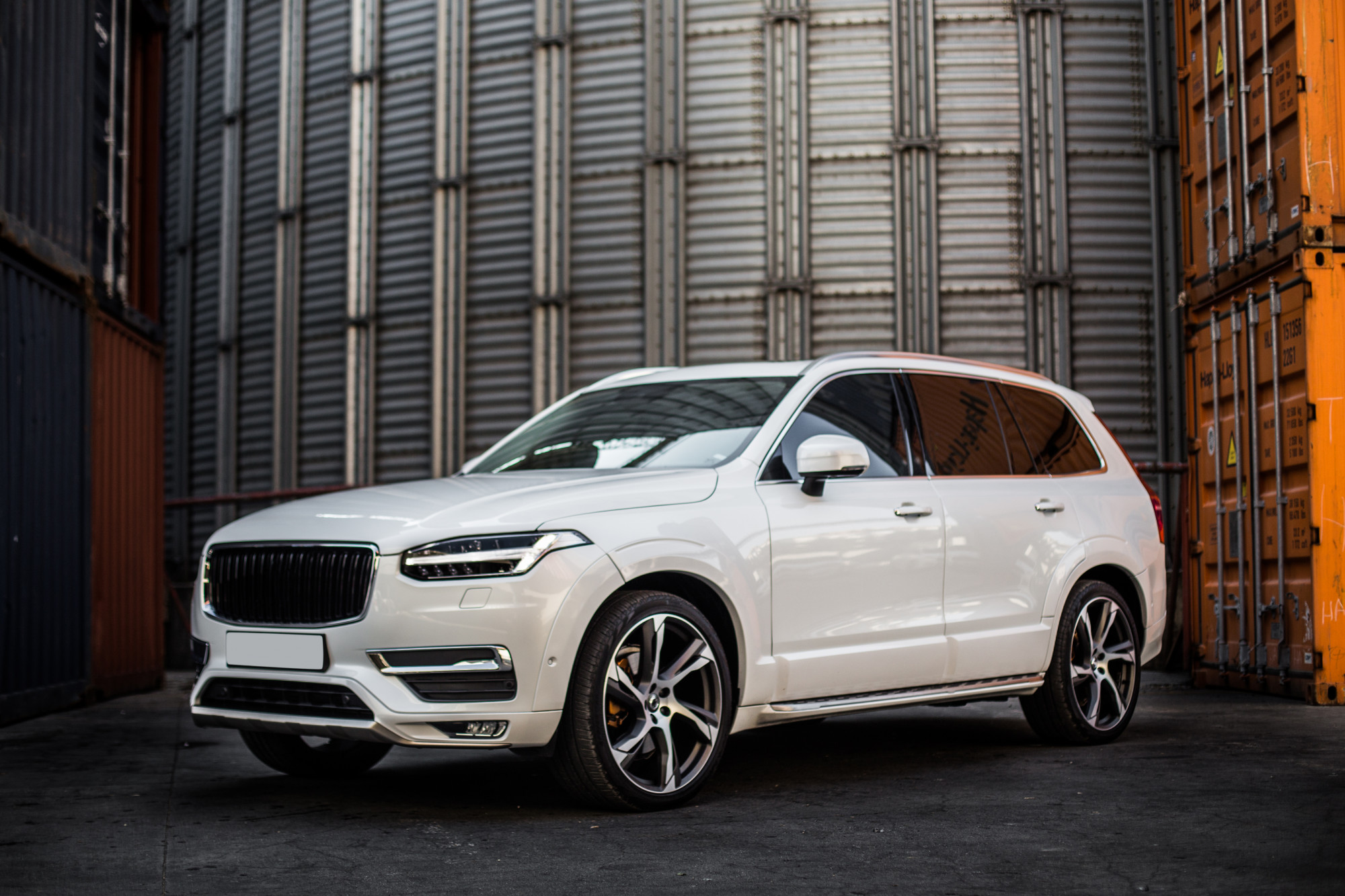
Automobile emergency braking (AEB) is one of the most advanced safety technologies on cars today, designed to reduce accidents by automatically braking when detecting a risk of collision. Car manufacturers such as Skoda with Kodiaq or Mitsubishi with Xforce have improved AEB, bringing hope for safer traffic. However, the series of accidents involving a Mercedes-Benz S450 in Ho Chi Minh City on March 16, 2025 has sparked controversy about the reliability of this system, causing many to question whether the technology is really as reliable as expected.
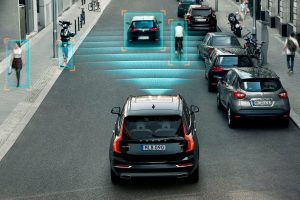
AEB uses radar, cameras and sensors to detect obstacles such as vehicles, pedestrians or obstacles. When a risk of collision is detected, the system warns the driver through sound, image or steering wheel vibration. If there is no response, AEB automatically brakes to avoid or reduce damage. On the Skoda Kodiaq, AEB supports pedestrian detection at low speeds, suitable for crowded urban areas. The Mitsubishi Xforce integrates a forward collision mitigation system (FCM), which works effectively at speeds of 5-80 km/h for vehicles and 5-65 km/h for pedestrians. These improvements show efforts to optimize technology for reality.
According to the US National Highway Traffic Safety Insurance Institute (IIHS), AEB can prevent 20% of collisions. In Vietnam, with high traffic density and uneven driving awareness, AEB is expected to significantly reduce accidents.
Mercedes-Benz S 450 accident: warning bell
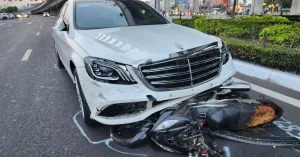
The accident at Thu Duc intersection, Ho Chi Minh City, when a Mercedes-Benz S450 hit 10 motorbikes, killing one person, has shaken confidence in AEB. Although Mercedes-Benz is famous for its safety technology, the 2019 S450 in Vietnam only has the emergency brake assist system (BAS), not the full AEB like the new models. This raises the question: The effectiveness of AEB depends too much on the vehicle configuration and driver behavior. If the driver does not control the speed or disables the system by pressing the accelerator hard, AEB is difficult to take effect. The human factor, therefore, is still a major limitation.
Controversy over reliability
AEB is not always perfect. IIHS has pointed out that the system has difficulty recognizing motorbikes or pedestrians at high speeds, especially in low light conditions – a common situation in Vietnam. Some users complain that AEB causes unnecessary sudden braking, causing danger on crowded roads. On the contrary, supporters say that AEB is just a support tool, not a substitute for driving skills. Improvements in the Kodiaq and Xforce are a testament to efforts to address these limitations, but driver awareness remains the key.
AEB is a major step forward in automobile safety technology, with the potential to significantly reduce accidents. However, the Mercedes-Benz S 450 case is a reminder that technology is not a “panacea”. For AEB to be truly reliable, it will need to combine technical innovation, increased user awareness and adaptation to the realities of the road. When it becomes standard, AEB could usher in a new era of safer driving, but only if humans and machines work together effectively.